```markdown
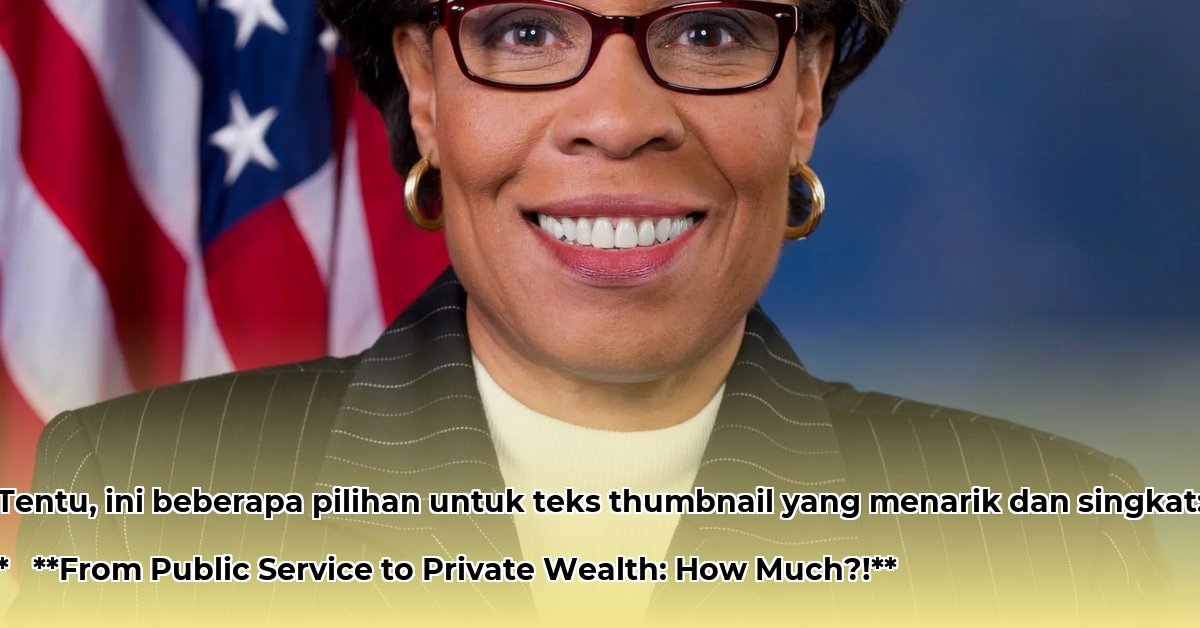
Revealed: Marcia Fudge's Net Worth After HUD Public Service vs. Private Wealth Realities
Marcia Fudge has spent years in the public eye, working her way up from mayor of a small Ohio town to leading the nation's housing policies as HUD Secretary. So, what does a life dedicated to public service mean for someone's personal finances? This article, "Revealed: Marcia Fudge's Net Worth After HUD Public Service vs. Private Wealth Realities," takes a closer look at Marcia Fudge's wealth, where it comes from, and if her money aligns with her work in housing. We'll lay out all the details, compare her to others in similar roles, and see how her policies as HUD Secretary stacked up. Plus, we'll break down what her career can teach us about balancing public service and personal finances, and how to make housing policies better for everyone in the future.
Marcia Fudge Net Worth: Revealed After HUD Public Service vs. Private Wealth Realities
Marcia Fudge, a prominent figure in both Ohio politics and national housing initiatives, has dedicated her life to public service, moving from being a local mayor to leading the Department of Housing and Urban Development (HUD). This naturally leads to questions about what her career means for her personal finances. Let's explore the specifics of Marcia Fudge's financial situation, how she accumulated her wealth, and how it compares to the complexities of a life in the public sphere. Curious about similar figures? Consider exploring politician financial details. We will also explore government ethics and personal finance.
Unveiling Marcia Fudge's Net Worth
According to a 2021 assessment by Forbes, Marcia Fudge's estimated net worth is around $2 million. But what makes up this amount? It appears that a significant portion is tied to real estate investments in Ohio, with potentially smart purchases. She also has two government pensions, one from the state of Ohio and another from her work in the federal government, which represent her earnings from her years of public service. This includes insight into investment strategies.
While $2 million is a considerable amount, it's important to consider the context. How does it measure up against others in similar positions? Is it unusually high, or is it within the expected range for someone with her level of experience? It's worth remembering that the Forbes assessment is a snapshot in time, and changes in the market and her personal situation could affect the final figure. It is not uncommon for people's wealth to fluctuate based on how well their investments are doing and these figures can only serve as estimates. Does Marcia Fudge's financial portfolio highlight the potential for accumulating wealth through a career in public service, or are there other factors at play influencing her financial standing?
From Warrensville Heights to Washington D.C.: Charting Her Career
Fudge began her journey in Warrensville Heights, Ohio, where she was mayor from 2000 to 2008, setting the stage for her political career. This local leadership role helped her move to the national level, representing Ohio's 11th congressional district from 2008 to 2021, where she learned about the details of federal governance. Being appointed as HUD Secretary in 2021 marked a high point, putting her in charge of national housing programs until 2024. This also includes leadership skills.
It raises the question if each step in her career contributed to her overall financial status? We need to analyze how each role likely influenced her financial standing over time. Can a deeper understanding of Marcia Fudge's career trajectory provide insights into the potential financial benefits and trade-offs associated with a life devoted to public service?
Navigating Ethical Challenges: Controversies and Considerations
It's impossible to discuss a public figure's career without addressing the inevitable controversies. Fudge's time in office has had its share of challenges, including a Hatch Act violation for statements she made about an Ohio Senate election. This raises the question of how these violations affect the public's trust, and what lessons can future public officials take away from them? Understanding ethical responsibilities is key.
Additionally, a letter of leniency she wrote for Lance Mason, who later committed a violent crime, sparked ethical debates. This raises difficult questions about the responsibilities of public officials when advocating for individuals involved in controversial cases. Handling these situations requires carefully balancing compassion, judgment, and sticking to ethical principles. Some people might argue that officials should always be held to a higher standard, while others may emphasize the importance of empathy and giving people a second chance. How can public officials effectively navigate complex ethical dilemmas, balancing compassion and accountability while upholding the public's trust?
Marcia Fudge's Tenure at HUD: Policies and Lasting Effects
As HUD Secretary, Marcia Fudge championed policies aimed at tackling homelessness and promoting equal housing opportunities. But what were the real results of these efforts? Did they achieve what they were supposed to, and how will they shape the future of housing policy in the United States? Exploring housing initiatives is important.
To understand her impact, we need to look closely at the data and measurable results, separating the intentions from the actual impact on communities and individuals. What were the measurable outcomes of Marcia Fudge's policies as HUD Secretary and how do these results inform future approaches to addressing housing challenges in the United States?
- Policy Focus: Tackling homelessness, promoting fair housing.
- Assessment Needed: Long-term impacts of policies, how well they address inequality.
Actionable Takeaways: Lessons for Future Leaders
What can aspiring public servants, policy experts, and engaged citizens learn from Marcia Fudge's experiences? Through looking at public policy we can gain insights.
| Stakeholders | Short-Term (0-1 Year) | Long-Term (3-5 Years) |
|---|---|---|
| Future Public Servants | Review guidelines, like the Hatch Act, to understand potential implications of endorsements. Seek training in conflict resolution and communication. | Prioritize transparency and accountability. Consider the long-term effects of policies on vulnerable groups. Develop strong support systems. |
| Policy Analysts | Analyze Fudge's tenure as HUD Secretary, focusing on policy implementation and results. | Evaluate the effectiveness of her programs in addressing inequality and homelessness. Identify best practices and areas for improvement. |
| Voters | Research political candidates' backgrounds and ethical stances. | Engage in informed discussions about housing policy and hold officials accountable. Advocate for policies promoting affordable housing. |
How did Fudge violate Hatch?
Key Takeaways:
- Marcia Fudge's estimated $2 million net worth contrasts with her ethical responsibilities as a public servant.
- The Hatch Act violation underscores the complexities of political activity for cabinet members.
- The case highlights the importance of ethics training, vigilant oversight, and citizen engagement.
- Wealth isn't a prerequisite for public office, and public service can lead to financial stability.
Marcia Fudge, a prominent figure in American politics, presents a compelling case study examining the intersection of public service, personal wealth, and ethical conduct. Her career, from local government to a cabinet position, offers insights into the financial realities of political life and the potential pitfalls of navigating ethical boundaries. So, how does a career dedicated to public service translate into personal wealth, and how did Fudge violate Hatch? Examining political ethics can give insights.
Fudge's Financial Standing
Fudge's estimated $2 million net worth, as reported by Forbes, reflects a blend of real estate holdings and government pensions. Her portfolio encompasses four homes, including three in Warrensville Heights, Ohio, and a condo in Washington D.C. Crucially, two government pensions contribute significantly, totaling roughly $1.1 million. This comprises approximately $700,000 from her Ohio state pension and an estimated $400,000 federal pension accrued during her time in the U.S. House of Representatives. Does this suggest that a lifetime dedicated to public service can lead to a comfortable financial position? It certainly does for Fudge. How does Marcia Fudge's accumulation of wealth through public service compare to the financial trajectories of other individuals in similar government roles, and what factors contribute to these variations?
The Hatch Act Controversy
However, Fudge's career isn't without its ethical blemishes. The U.S. Office of Special Counsel (OSC) concluded that she violated the Hatch Act during a White House press briefing in March 2021 [Citation: https://edition.cnn.com/2021/05/14/politics/marcia-fudge-hatch-act-violation/index.html]. While acting in her official role as HUD Secretary, she voiced support for the Democratic Party's prospects in the Ohio Senate race. Fudge stated, "I believe we can win the Senate race”. Understanding legal compliance is key.
The Hatch Act explicitly prohibits federal employees from leveraging their official positions for political activities, including actions that support or hinder a political party or candidate. The OSC issued a warning letter, acknowledging Fudge's remorse and the counseling she received from HUD ethics officials. However, the letter also cautioned that future violations could result in tougher penalties. Why is this significant? It highlights the tightrope that cabinet members walk, balancing their political affiliations with their duty to remain impartial in their official capacities. To what extent do